ICYMI: Application Delayed as 680 Local Residents Gain Standing on Olds, Alberta Data Centre Proposal
Appeared originally in The Energy Mix - June 19, 2026, updated with unanswered questions, lobbyists on board, and a bee

I am grateful to be writing this newsletter from Moh’kinstis, and the traditional Treaty 7 territory of the Blackfoot confederacy: Siksika, Kainai, Piikani, as well as the Îyâxe Nakoda and Tsuut’ina Nations. The Treaties were an agreement to share the land and must be honoured. I support land back as an act of reconciliation. Lands inhabited by Indigenous peoples contain 80% of the world’s remaining biodiversity. Indigenous Peoples’ traditional knowledge systems are critical to creating a more harmonious future for all. My Scottish/Irish ancestors were immigrants who travelled by ship to the east coast in the late 1700’s or early 1800’s. We arrived uninvited on the traditional unceded territory of the Wəlastəkewiyik (Maliseet) whose along with the Mi’Kmaq / Mi’kmaw and Passamaquoddy / Peskotomuhkati Tribes / Nations had signed Peace and Friendship Treaties with the British Crown in the 1700s. As a child in the 1970’s, my parents moved the family west to work in the oil sands and I spent my teen years growing up in Treaty 8 territory, the traditional lands of the Denesuline and Cree People.
📢 LATEST UPDATES - SYNAPSE HIRES LOBBYISTS (scroll to the end for details)
Alberta’s utility regulator has granted intervener status to more than 680 individuals in the small town of Olds, writing that they may be directly and adversely affected by its decision on a proposed 1.4-gigawatt (GW) power plant and data centre within the town limits.
In a June 16 ruling, the Alberta Utilities Commission (AUC) also extended [pdf] its usual 2,000-metres rule [pdf], which limits notification and consultation, to include anyone living in Olds. It cited the “potential strain on municipal services, the proximity to residential areas, impacts to property values, increased noise, agricultural impacts, negative health effects, and effects on the environment.”
All of those individuals are eligible to be reimbursed for any legal or consultation costs, according to the letter from Commission Counsel Taylor Campbell.
The AUC has not estimated the cost of fulfilling that promise, a representative told The Energy Mix. The AUC acts as an adjudicator for the reimbursement of costs, which must be covered [pdf] by the Quebec-based company, Synapse Real Estate Corp, that announced the $10-billion project in January. Applicants are required to follow the AUC’s payment decisions, which are assessed after the proceeding ends.

“The Commission considers whether participation contributed to a better understanding of the issues and whether efforts were made to avoid duplication,” said the AUC representative. “For example, by using shared experts rather than multiple individual reports.”
The regulator’s operations are funded entirely through an administrative fee paid by regulated utilities and market participants. “There is no direct government funding,” but staffing levels must be approved by the provincial government, the representative told The Mix, adding that staffing levels have “remained stable.”
“Albertans are being asked to shoulder the risks and costs of major data centre projects without a clear plan, framework, or basic safeguards from this government.”
An April, 2025 letter from AUC chief executive Robert D. Heggie lists the commission’s budgeted administration fee for 2025-2026 at $34.27 million, an increase [pdf] of $1.6 million from the previous year.
NDP: ‘Albertans shouldn’t be left paying the bill’
Technology and Innovation Minister Nate Glubish did not reply to questions about the province’s artificial intelligence (AI) data centre strategy and whether there would be increased costs to ratepayers for bring-your-own power plants, referring The Mix to the AUC for answers. The AUC did not address the strategy in its response.
“Albertans are being asked to shoulder the risks and costs of major data centre projects without a clear plan, framework, or basic safeguards from this government,” Kyle Kasawski, the Alberta NDP’s shadow minister for affordability and utilities, said in a statement.
“Whether it’s environmental oversight, community consultation, or who ultimately pays, the UCP is leaving too many unanswered questions,” he said, adding that the NDP “welcomes economic development opportunities under the right circumstances.”
Kasawski said the AUC is “doing its job, and we appreciate all of the Albertans who have shared their views on this project,” but “Albertans shouldn’t be left paying the bill for a government that refuses to do its homework.”
Another 475 denied standing, unable to ask questions or give evidence
More than 1,100 statements of intent to participate in the Olds hearing landed with the regulator, making it possibly the largest number ever received for a single project. From those hundreds of submissions, the AUC issued its decision on June 16 outlining who is most affected and granting them “standing” in the hearing process, meaning they can give evidence, question witnesses, and provide arguments.
The Town of Olds and Olds Residents for Responsible Development (ORRD), a group formed to represent the interests of people affected by the data centre, have both also been granted full standing in the application process. Another 475 participants were denied standing based on criteria including their proximity to the project.
Olds Mayor Dan Daley did not respond to The Mix’s questions about whether the Town could have done more to address residents’ concerns about the project. Nor did he indicate what consultation the province undertook with municipalities about the AI data centre strategy, or the possible costs to ratepayers of an AUC hearing of this magnitude.
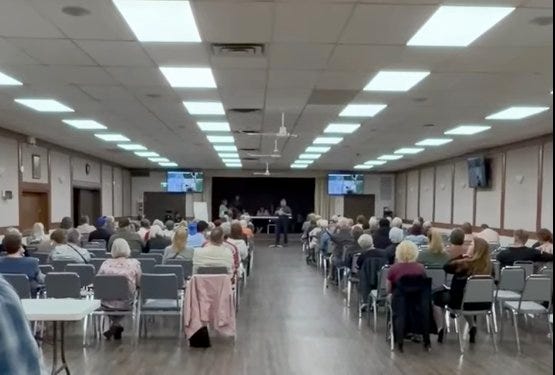
Commission Counsel Campbell encouraged people with standing to join ORRD or form their own group to “reduce duplication of submissions and costs, and support an efficient hearing process.” She also suggested interveners find “legal representation or other specialized assistance to help them participate.”
In a separate letter on June 16, Lead Application Officer Victor Choy wrote that the AUC had decided to suspend [pdf] the current schedule for the proceeding “to support a more efficient process that is focused and reduces duplication of effort.”
But the AUC representative said “the proceeding itself has not been paused,” and the commission continues to review the application and the evidence.
Costs and scope led to a pause, interveners asked to coordinate
Jasona Rondeau, a registered observer of the Synapse proceeding and a social advocate helping Olds residents navigate the AUC hearing, said the suspension of the schedule is “a reflection of the large number of interveners and the potential costs that could be incurred for such a large group with such a diverse range of issues.”
“If the AUC had let the interveners proceed to filing information requests for so many people, it could result in significant expenses incurred by both legal and expert witnesses, not to mention the time and energy it will require to review what could be hundreds of questions,” said Rondeau.
Synapse Real Estate Corp has responded [pdf] to the AUC’s first 26 issues, which included questions about zoning, back-up diesel generators, battery storage, water usage, public consultation, noise, air quality, public benefits, and emergency response. Choy said the regulator is preparing more questions.
The suspension was needed to “consider the use of intervener budgets and scoping of the proceeding,” and allow time to consider Synapse’s responses, he wrote.

Choy asked the interveners to delay drafting information requests and preparing evidence for now. After the regulator submits its second round of questions, which he said will be provided “in due course,” and receives a response from Synapse, it will outline a schedule. He gave assurances that the hundreds of local interveners would be provided sufficient time to review the information.
Rondeau said the second round of questions “should serve to reduce the number of intervener questions coming forward,” adding that “it is a signal that they are not rushing this application by any means.”
This is Synapse’s second application for a power plant after its first attempt was closed on March 6 due to “significant deficiencies”. Synapse CEO Jason van Gaal did not immediately respond to questions about his company’s public involvement program, the costs of the AUC application proceeding, or the changes to the hearing schedule.
Synapse had prepared a public information package with plans [pdf] to begin construction this past March, with power plant approvals in place by July and completion of construction by May, 2027
Read the original version of the story at The Energy Mix
and subscribe - it’s also free!
Latest updates - Synapse hires lobbyists
Synapse seems to have changed its approach recently. CEO Jason van Gaal had initially been very approachable and willing to answer questions, but some have observed a change in the company’s approach.
Perhaps it has something to do with the hiring of public affairs agency, Crestview Strategy? The folks at the Olds Transparency Project have discovered that a team from Crestview registered with Alberta’s Lobbyist Registry on July 17 and Synapse is their client.
According to their website, Crestview “experts use cutting-edge tools and methodologies in campaigns to make, change and mobilize public opinion.”
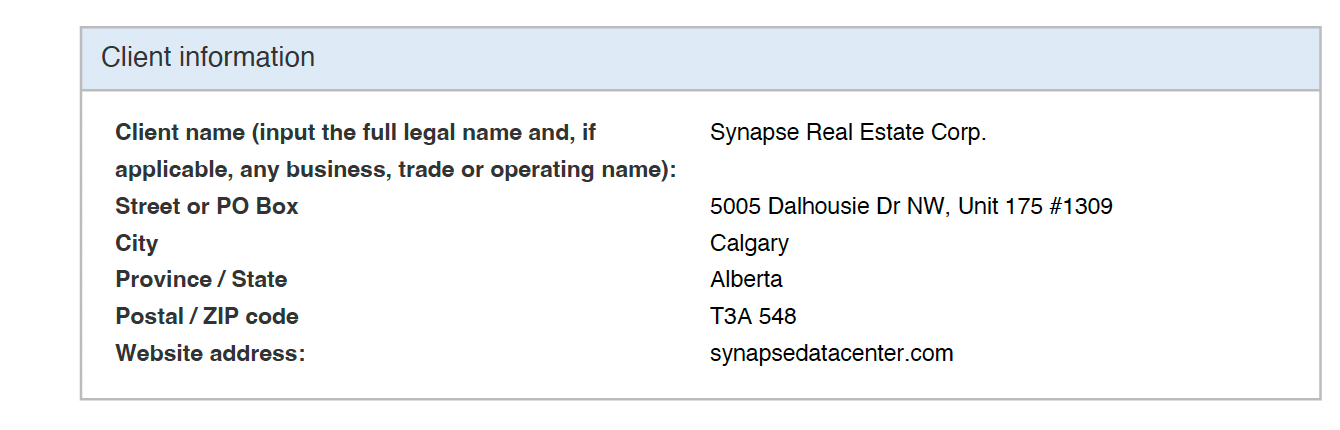
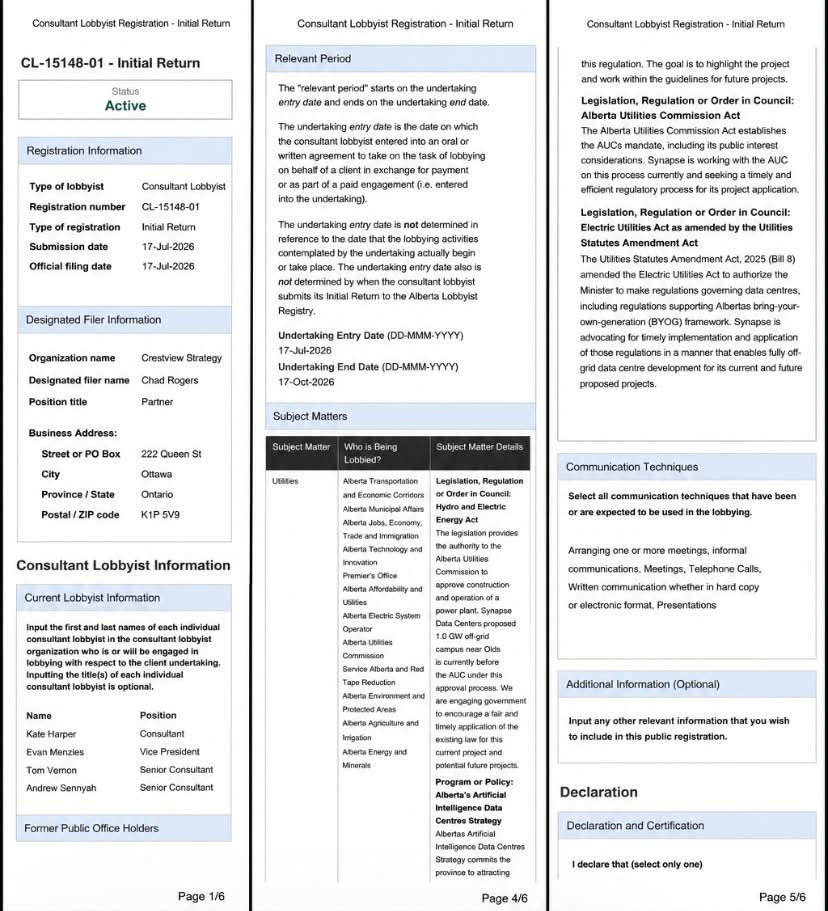
Three out of the four lobbyists working on the Synapse file have connections to the federal and/or provincial conservative parties: Evan Menzies, former director of communications for the United Conservative Party; Andrew Sennyah, former assistant to Alberta’s Environment and Parks Minister (Jason Nixon); and Kate Harper spent five years in the Office of the Leader of the Official Opposition in Ottawa.
Meanwhile, here are my questions to van Gaal that went unanswered:
Did Synapse carry out a sufficient public involvement program to address issues beforehand?
What responsibility do you think companies/proponents have for addressing the concerns of directly affected individuals to the best of their ability before filing an application to the AUC?
Did you expect to see this amount of opposition to the project?
The Olds mayor also did not respond to questions
Other than when I sent my first email, Mayor Dan Daley had been responding to my questions. But he did not respond to these ones I sent him ahead of writing this story:
Could the Town have done more to address resident’s concerns prior to going to an AUC hearing? Would you do anything differently next time?
Is this opposition coming as a surprise?
Did the Alberta government consult with your municipality before releasing its data centre strategy?
What responsibility do you think companies/proponents have for addressing the concerns of directly affected individuals before filing an application to the AUC?
Is it reasonable that ratepayers may have to pay for Synapse’s gaps in community involvement/consultation?
Ed. note: Operational expenses for the AUC are not directly covered by taxpayers, but as ratepayers in the province’s electricity market, there is an administrative fee that is levied to cover those costs. (Source)
I’ve heard that community members have been confronting the mayor and councillors at various public events recently, which has led to some tense moments. Residents are not happy with their elected representatives, a situation that is being repeated almost everywhere a data centre is proposed.

Detailed questions asked of the Alberta government and the AUC:
After emailing the Technology and Innovation minister’s office, my email appears to have been forwarded to the Affordability and Utilities minister’s office. Neither office answered the following questions:
What responsibility do companies/proponents have for addressing the concerns of directly affected individuals before filing an application to the AUC?
Is it reasonable that ratepayers (I initially wrote “taxpayers” but revised it in a second email) have to pay for Synapse’s gaps in community involvement/consultation?
Ashlii Barrett, press secretary to Minister RJ Sigurdson, told me “the AUC will be following up with you, as they’re best positioned to respond to this and clarify how the legal cost piece works.”
“The AUC expects proponents (companies) to engage with potentially affected parties early and make reasonable efforts to address concerns before filing an application.”
I had already emailed the AUC with similar questions and they explained in an email with more detail how costs/expenses will be covered for the large number of interveners.
Has the AUC estimated how much it may cost to cover expenses for more than 650 individuals who’ve been given standing?
The AUC has not calculated a total cost estimate at this time. Any participant cost awards are determined through a separate, established process set out in AUC rules and are accessed after the proceeding record closes. They depend on the specifics of each claim, including the nature and level of participation.
Will Synapse be responsible for paying those costs? Or will that fall to the AUC?
Under AUC rules, participant costs are not funded by the Commission. Where costs are awarded, the Commission directs that they be paid by the applicant, consistent with the cost recovery framework set out in AUC Rule 009: Rules on Intervener Costs. Meaning the costs are borne by the applicant (in this case Synapse), not ratepayers.
Will ratepayers be expected to cover any of those costs?
Cost responsibility is determined through formal AUC decisions, based on the applicable rules and specifics of the proceeding. In this case, any approved cost awards would be borne by the applicant, not ratepayers, in accordance with the Commission’s cost recovery framework.
What responsibility do companies/proponents have to addressing the concerns of individuals before filing an application to the AUC?
The AUC expects proponents (companies) to engage with potentially affected parties early and make reasonable efforts to address concerns before filing an application. Early engagement can reduce duplication, improve efficiency and in some cases, minimize the need for issues resolved through a hearing process.
The requirements for consultation are set out in Rule 007: Facility Applications, Appendix A1, but the precise extent and scope of an applicant’s participant involvement program (the process it follows to engage with potentially affected parties), varies depending on the specific facts of any given application. The AUC assesses the adequacy of consultation as part of its overall public interest assessment of a project at the end of a proceeding.
How does the AUC ensure companies cover those costs?
The AUC has formal rules governing participant cost recovery, including Rule 009: Rules of Intervener Costs and Rule 022: Rules on Costs in Utility Rates Proceedings. These rules set out eligibility, how costs are assessed, application requirements and the process for awarding costs. When costs are approved, the Commission issues a decision directing payment, which applicants are required to follow.
Costs are assessed after the record closes. The Commission considers whether participation contributed to a better understanding of the issues and whether efforts were made to avoid duplication. For example, by using shared experts rather than multiple individual reports.
How often does the AUC initiate a pause in a proceeding in this way?
The Commission manages each proceeding on a case-by-case basis to ensure a fair and efficient process. In this instance, the proceeding itself has not been paused. The Commission continues to review the application and evidentiary record. The process schedule was adjusted to allow for additional information requests, which is intended to support a more focused and efficient process.
I then replied to the AUC with some follow-up questions:
The costs of the AUC operations (staff salaries etc.) are paid by industry and ratepayers via an administrative fee. I see from your website that the fee was down 62% in 2024. Where is the administrative fee now (in 2025-26) and will the large number of data centres coming online, bringing their own power, mean the costs of AUC operations will increase?
The AUC is fully self-funded through an administrative fee paid by regulated utilities and market participants. There is no direct government funding.
The AUC’s administrative fee is not driven by any single type of project. It is based on the Commission’s overall forecast costs and the services required to regulate the sector and is allocated across industry participants using established methodology under AUC Rule 025: Administration Fee.
For 2025-26, the AUC budgeted administration fee is approximately $34.27 million, and is based on forecasted operating and capital costs for the year. Further details can be found in a letter issued by our Chief Executive on April 7, 2025, or by visiting our Financing AUC operations webpage.
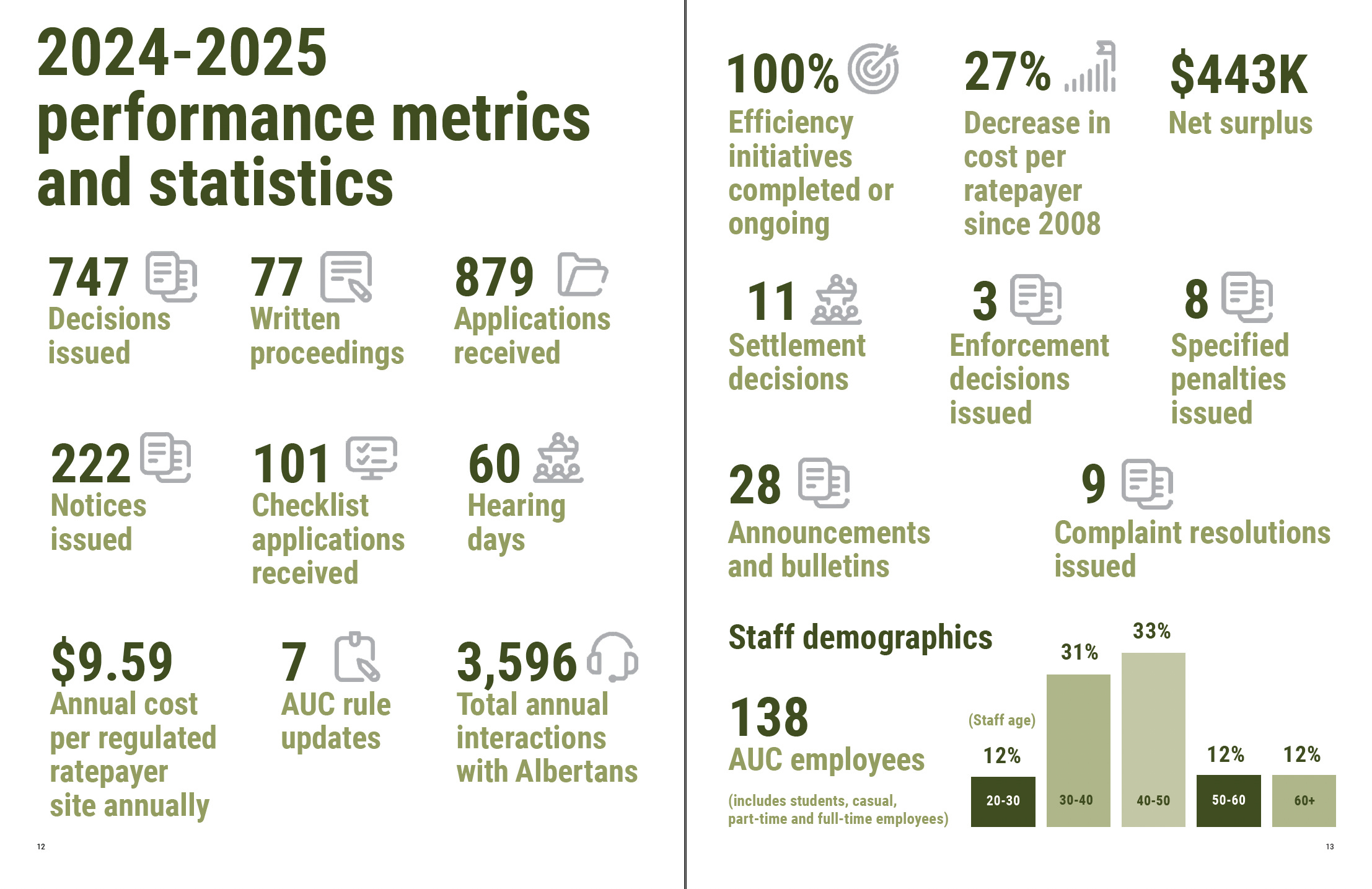
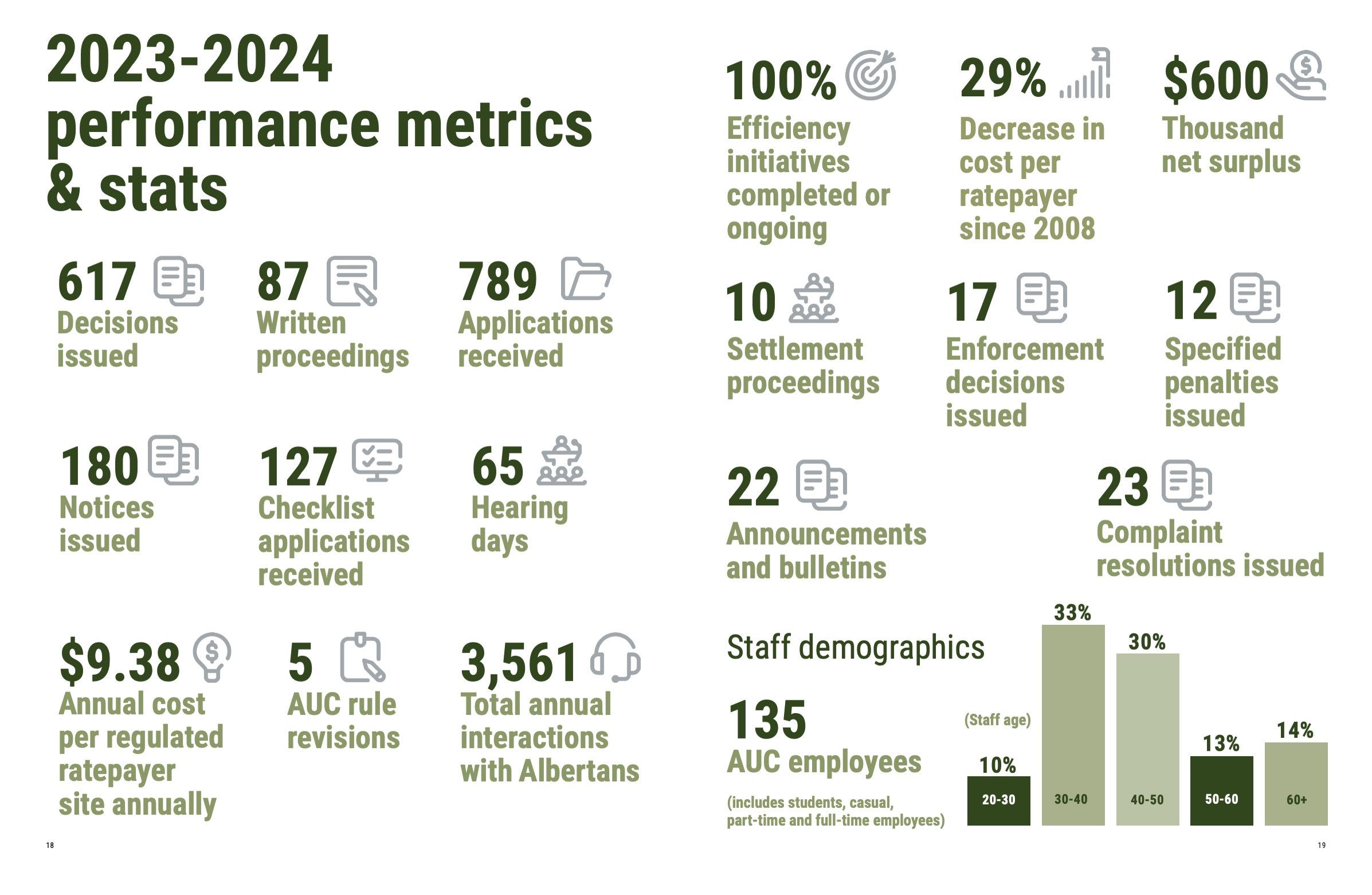
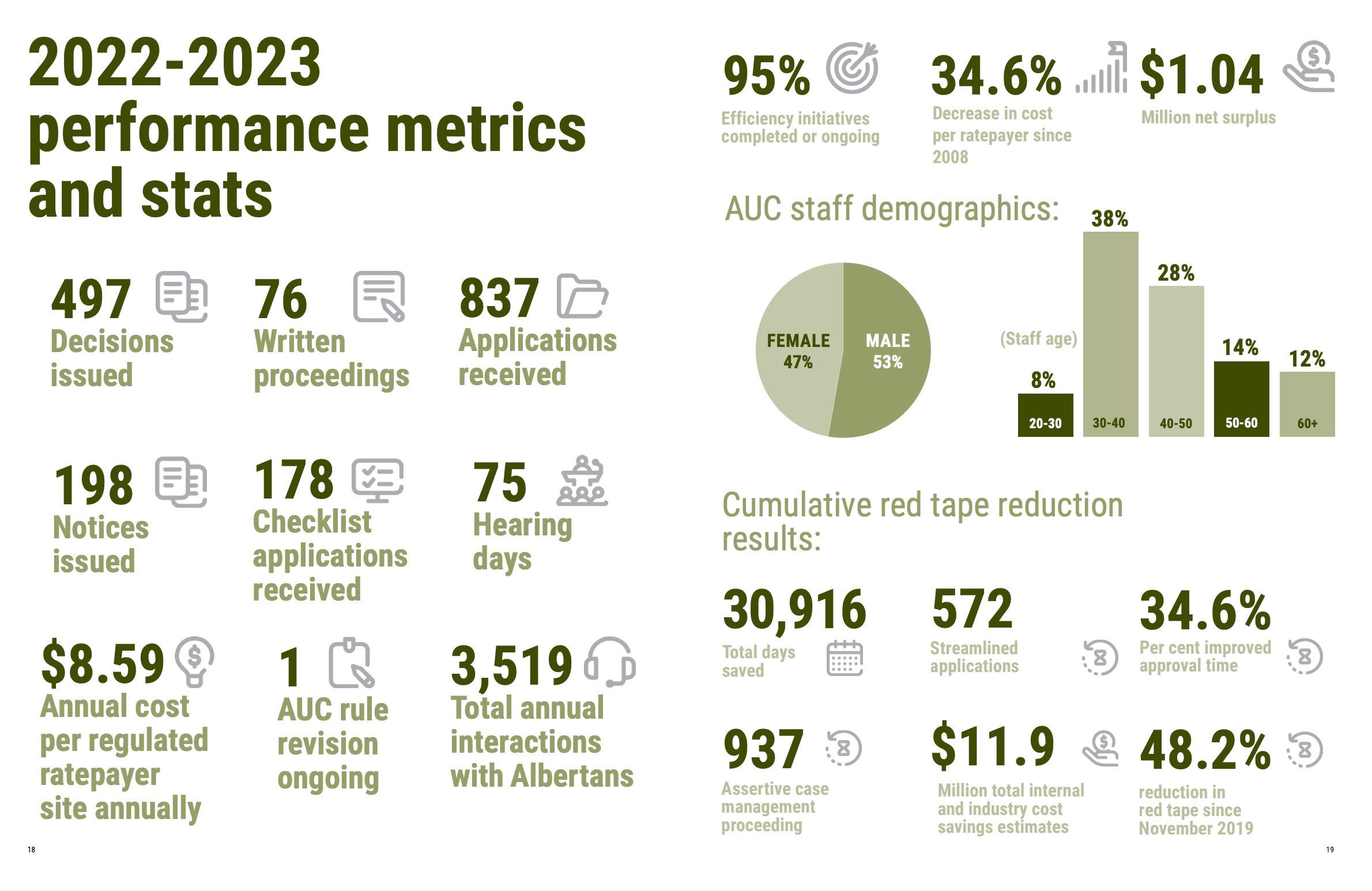
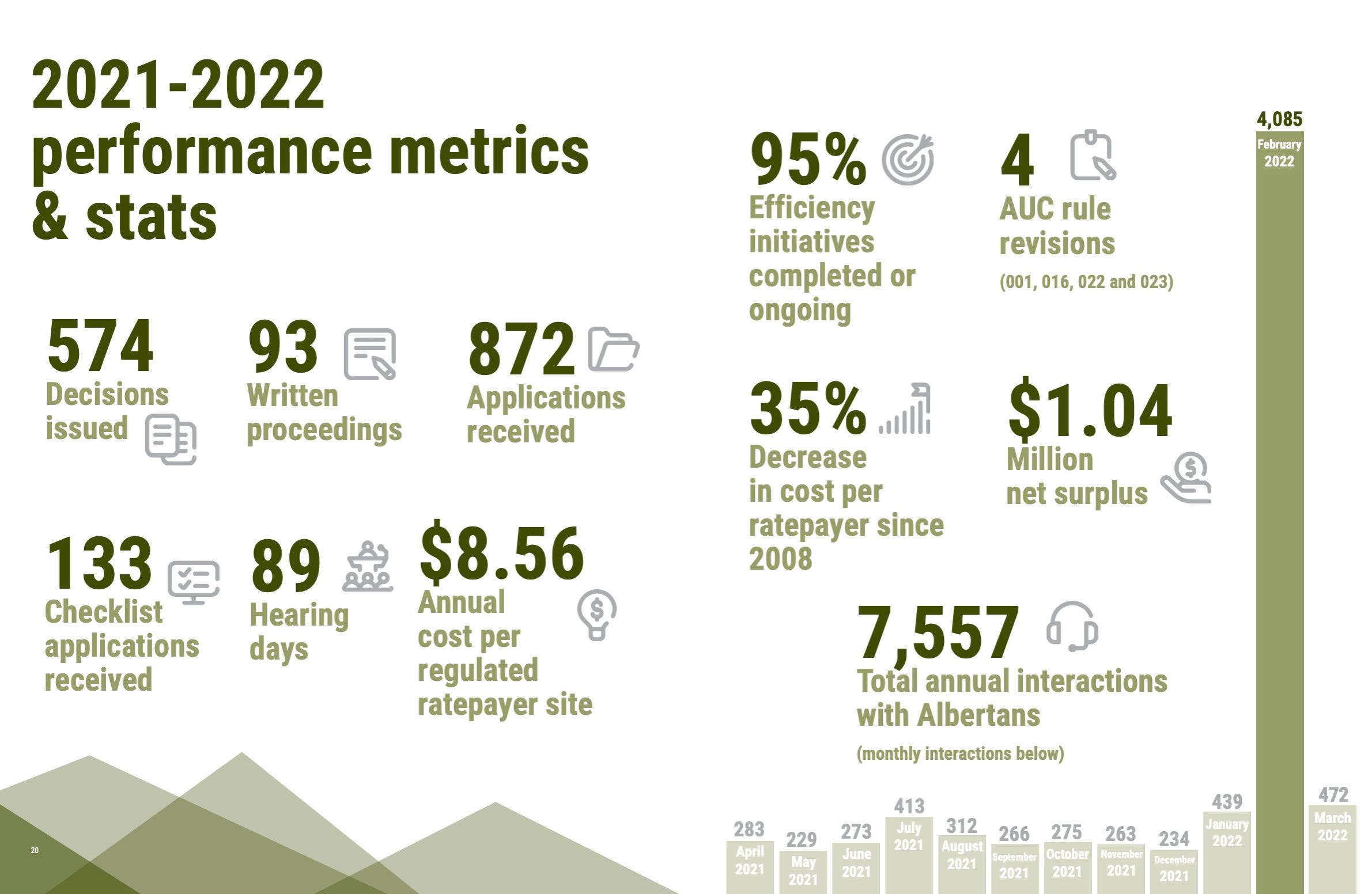
I’ve also heard that the AUC is hiring quite a lot of people lately? Can you confirm if there has been an increase in hiring? If yes, how many more staff are you hiring?
The AUC operates within a headcount approved by the Government of Alberta and manages its staffing to stay within that limit. Overall, our staffing levels have remained stable over time.
What is the current headcount of the AUC? And what was the headcount for last year?
AUC’s annual headcount can be found in our report cards. Which are published to our website: https://www.auc.ab.ca/report-cards-and-reviews/
AUC Report Cards - A snapshot
2024-2025
2023-2024
2022-2023 (Total staff headcount not provided)
2021-2022 (Total staff headcount not provided)
For you - some nature photography…